Shungite is an unusual carbon-rich mineral found primarily in the Republic of Karelia in northwestern Russia. Named after the Karelian village of Shunga, it is believed to have formed around two billion years ago and is notable for its distinctive composition, electrical conductivity, and unusual carbon structure.
But shungite has attracted interest for reasons that go well beyond its geology. It has a long history of use in Russia, particularly in connection with water purification, and today it is also used for EMF protection and a variety of energetic and wellness purposes. Scientific interest in shungite increased further following the discovery of unusual carbon structures associated with fullerenes, sometimes called “buckyballs.”
So, what is shungite and what are its properties? In this article, we’ll look at what makes this ancient Karelian mineral so unusual, the different types of shungite, its connection with fullerenes, and some of the ways it is used today.
What Is Shungite?
Shungite is a naturally occurring, carbon-rich rock found primarily in the Republic of Karelia in northwestern Russia. Some of the best-known deposits occur in the Lake Onega region, including around the village of Shunga, from which shungite gets its name.
What makes shungite particularly unusual is its composition. Unlike coal or graphite, its carbon is combined with a complex mixture of minerals, including silicates and various trace elements. The amount of carbon can vary considerably from one piece of shungite to another, which accounts for some of the differences in its appearance, weight, conductivity, and value.
Most shungite is black or dark grey and can range from a dull, almost coal-like material to a much more lustrous form with a metallic sheen. The rarer, high-carbon variety is generally known as elite or noble shungite, while the more abundant forms contain a lower percentage of carbon.
Shungite is also remarkably old. The major Karelian deposits are associated with Precambrian rock formations approximately two billion years old. Exactly how such large concentrations of carbon formed has long been a subject of scientific investigation, and the unusual structure of that carbon has contributed greatly to modern interest in shungite.
What Are the Different Types of Shungite?
Not all shungite is the same. It occurs in several forms with different concentrations of carbon, which affect its appearance, conductivity, rarity, and value. Although classification systems vary, shungite is commonly divided into three general types.
Type I, often called elite or noble shungite, is the rarest form and has the highest carbon content, typically reported at around 90% or more. It has a distinctive silvery-black or metallic appearance and often breaks into irregular shapes with shiny surfaces. Because elite shungite represents only a small proportion of known shungite deposits, it is considerably more expensive than the more common varieties.
Type II shungite contains a lower concentration of carbon and is commonly used for polished stones, pyramids, spheres, and many other shungite products. It is generally black rather than metallic and can be shaped and polished much more readily than brittle elite shungite.
Type III shungite contains still less carbon and a greater proportion of other minerals. It is more abundant and is used primarily for industrial purposes rather than for the decorative and personal-use products commonly associated with shungite.
The difference is more than cosmetic. As the proportion and structure of carbon change, so do some of shungite’s physical properties, particularly its electrical conductivity. This unusual carbon content is also at the heart of one of the most intriguing aspects of shungite—the possible presence of fullerenes, or “buckyballs.”
Does Shungite Contain Fullerenes?
One of the most fascinating aspects of shungite is its association with fullerenes, unusual carbon molecules that have attracted considerable scientific interest since their discovery in the 1980s.
The best-known fullerene is C60, or buckminsterfullerene. It consists of 60 carbon atoms arranged in a hollow, roughly spherical structure made up of pentagons and hexagons. The structure resembles both a soccer ball and the geodesic domes designed by architect Buckminster Fuller, which inspired its name. Because of its distinctive shape, C60 is also commonly known as a “buckyball.”
Fullerenes are much more than an interesting molecular shape. Their unusual structure gives them physical and chemical properties that have led researchers to investigate their potential applications in fields ranging from electronics and nanotechnology to medicine.
C60 has attracted particular attention for its interaction with free radicals and reactive oxygen species. Under certain conditions, C60 and various fullerene derivatives have demonstrated antioxidant activity, and researchers have explored their potential anti-inflammatory, antimicrobial, cellular-protective, and drug-delivery applications. Research into fullerenes continues, and their biological effects can vary considerably depending on how the molecules are prepared and used.
Fullerenes and Shungite
The connection with shungite became especially interesting when researchers reported finding fullerenes and fullerene-like carbon structures in samples of natural Karelian shungite. Since shungite deposits are approximately two billion years old, the possibility that these unusual carbon structures could occur naturally in such ancient rock generated considerable scientific interest.
The story, however, is more complicated than simply saying that shungite is made of fullerenes. Shungite contains a complex form of carbon, and fullerenes do not appear to occur uniformly or abundantly in every sample. More recent research has continued to examine the nanoscale organization of shungite carbon and the relationship between its unusual structure and its physical properties.
This distinction is important when considering some of the health claims made for shungite. Interesting effects observed with purified C60 or specially prepared fullerene compounds do not necessarily mean that the same effects will occur from wearing, holding, or otherwise using a piece of natural shungite.
Nevertheless, the fullerene connection remains one of the features that makes shungite such an unusual material. Together with its high carbon content, complex mineral composition, and electrical conductivity, it has helped generate continuing interest in how shungite interacts with its surroundings—including its possible interaction with electromagnetic fields and radiation.
How Does Shungite Interact With EMFs?
One of the best-known modern uses of shungite is for protection from electromagnetic fields (EMFs). Shungite plates, pyramids, spheres, pendants, and other shapes are commonly placed near computers, Wi-Fi routers, televisions, cell phones, and other electronic equipment.
There is a physical basis for shungite’s interaction with electromagnetic radiation. Its carbon-rich structure gives shungite electrical conductivity, and laboratory studies have demonstrated that appropriately prepared shungite materials can both reflect and absorb electromagnetic radiation. Researchers have investigated these properties for potential use in electromagnetic and microwave shielding materials.
However, this type of physical shielding should not be confused with the way a small piece of shungite is commonly used in the home or worn on the body. Conventional shielding depends on factors such as the amount and thickness of material, its position, and the frequency involved. A small shungite pendant or cell-phone plate does not surround the source with a conventional electromagnetic shield.
This raises an interesting question: if shungite does not eliminate the electromagnetic field, how might it provide protection? One proposed explanation involves what is known as the torsion field effect.
Shungite, EMFs and the Torsion Field Effect
In her book Shungite: Protection, Healing, and Detoxification, Regina Martino describes a bioenergetic explanation that differs considerably from conventional electromagnetic shielding.
According to this model, electromagnetic radiation has not only a measurable physical component but also an informational or energetic component associated with torsion, or rotation. Martino describes torsion fields as having either a left or right rotation and associates the left-torsion influence produced by pulsed electromagnetic sources, such as Wi-Fi and cordless communications, with potentially harmful biological effects.
Shungite is proposed to counter this influence by producing a strong right-torsion effect. Rather than eliminating the electromagnetic field, Martino describes shungite as transforming left-torsion information into right-torsion information, thereby neutralizing what she considers the harmful component of the radiation.
This distinction helps explain an interesting feature of the theory. An EMF meter placed near a Wi-Fi router or cell phone would continue to detect electromagnetic radiation even when shungite is present. The electronic device also continues to function normally. According to Martino’s interpretation, this is because the physical electromagnetic signal has not disappeared; it is the proposed torsion or bioenergetic component that has been altered.
In other words, shungite is not necessarily being used as a miniature physical shield that blocks radiation from reaching you. Under the torsion-field model, it interacts with the energetic characteristics associated with the field, potentially altering the proposed bioenergetic influence while leaving the functioning electromagnetic signal intact.
Torsion fields in this bioenergetic sense are not an established mechanism in conventional electromagnetic physics, so this explanation remains theoretical rather than scientifically confirmed. Nevertheless, it provides a very different explanation for shungite’s traditional use around electronic equipment and is an important part of Martino’s research and interpretation of shungite.
At the same time, shungite’s physical electromagnetic properties are independently measurable. Modern materials research has demonstrated conductivity, microwave reflection and absorption in shungite materials. Whether these measurable properties and the proposed bioenergetic effects are related—or represent entirely different phenomena—remains an interesting question.
Can Shungite Purify Water?
Long before shungite became associated with EMF protection, it was valued in Karelia for its connection with water. Shungite-bearing rock occurs naturally in the Lake Onega region, and there is a long history of using shungite in connection with drinking water and water purification.
Modern research provides some support for shungite’s usefulness as a filtration material. Its complex carbon and mineral structure gives it adsorptive properties, allowing contaminants to collect on its surface. Shungite-based filtration materials have been studied for removing various organic compounds, metals, and other impurities from water.
Shungite is also reported to have antibacterial properties, and this has contributed to its use in water-treatment applications. The effectiveness can vary considerably depending on the type of shungite, particle size, amount used, contaminants present, and length of contact with the water.
Shungite Water
Another traditional and contemporary practice is to place pieces of shungite directly into water and allow the water to stand for a period of time. This is sometimes referred to as shungite water or shungite-infused water.
Supporters of the practice attribute more than simple filtration to the process. Shungite water has traditionally been associated with cleansing and restorative qualities, while modern alternative-health explanations sometimes connect these effects with shungite’s unusual carbon structure and energetic properties.
It is important, however, to distinguish water treatment from making unsafe water safe to drink. A few pieces of shungite should not be relied upon to remove every possible pathogen, chemical contaminant, or heavy metal from questionable water. Proper filtration and disinfection remain necessary when the safety of a water source is uncertain.
There is another reason for some caution. Because shungite is a natural rock containing numerous minerals and trace elements, its composition varies according to its source. For water use, genuine shungite from a known source is therefore preferable to unidentified material sold simply as “shungite.”
The relationship between shungite and water is nevertheless one of the most interesting aspects of its history. Unlike some of the more recent uses associated with shungite, water purification takes advantage of physical properties of the material that can be studied and measured, while the traditional belief that shungite-treated water has additional energetic or wellness properties remains an area of continuing interest.
What Are the Energetic Properties of Shungite?
Beyond its physical properties, shungite has developed a reputation as a stone for grounding, protection, cleansing, and balancing energy. These qualities have made it popular among people who work with crystals, dowsing, meditation, energy healing, and other complementary practices.
Shungite is often described as having a strong grounding quality. Rather than producing the lighter or more stimulating feeling associated with some crystals, it is generally considered stabilizing and protective. For this reason, people may carry a piece of shungite, wear it as jewelry, keep it in their home or workplace, or place it near areas where they spend considerable time.
Another property commonly attributed to shungite is its ability to absorb, transform, or neutralize undesirable energies. This is one reason its energetic reputation has become closely connected with its use for EMF protection. From this perspective, shungite is valued not simply as a physical shield, but as a material that may influence the quality of the energetic environment around it.
Shungite and the Human Energy Field
In bioenergetic practices, shungite is also used in connection with the human energy field or aura. Practitioners may use it with the intention of clearing disturbed energy, strengthening the energy field, or restoring greater balance.
Regina Martino has explored this aspect of shungite extensively, using bioenergetic testing to investigate how different forms and shapes of shungite appear to affect living organisms and their surrounding energy fields. Her work proposes that shungite’s effects extend beyond its measurable physical characteristics and include an interaction with subtle or informational energies.
People who work with shungite may experience these effects differently. Some describe a sense of grounding or calm, while others simply appreciate having the stone in their environment. As with other forms of subtle-energy work, these experiences are subjective and are not presently measured or explained in the same way as shungite’s conductivity or other physical properties.
This combination of measurable physical characteristics and proposed energetic properties is a large part of what makes shungite so intriguing. It can be approached as an unusual carbon-rich natural material, as an energetic tool, or—as many people do—as a combination of the two.
How Can You Tell If Shungite Is Genuine?
As shungite has become more popular, other black stones and manufactured materials have sometimes been sold as genuine shungite. Unfortunately, appearance alone isn’t always enough to identify it. This is particularly true with polished pyramids, spheres, pendants, and other finished products, where the natural surface of the stone is no longer visible.
One of the first things to consider is where the shungite comes from. The best-known and most extensively studied deposits are found in the Republic of Karelia in northwestern Russia. Knowing the source of the material therefore provides an important starting point when assessing its authenticity.
There are also several simple tests you can perform at home. None provides absolute proof by itself, but together they can provide useful clues about whether a piece behaves as genuine shungite would be expected to.
Three Simple Ways to Test Shungite at Home
1. Test Its Electrical Conductivity
One of shungite’s most distinctive physical properties is its ability to conduct electricity. This is primarily related to its carbon content and structure.
One of the easiest ways to test conductivity is with a multimeter. Set the meter to measure resistance and place the two probes against different points on the shungite. If the material is conductive, the meter should register a measurable resistance rather than behaving like an electrical insulator.
Another demonstration uses a simple electrical circuit containing a battery and small light or LED. When the shungite is placed in the circuit and contacted by the two leads, its conductivity allows current to pass and the light can illuminate. Some commercial conductivity testers contain their own battery, so only the two probes and indicator light are visible.
Conductivity is one of the more useful home tests for shungite, although it is not absolute proof of authenticity. Other carbon-rich or conductive materials can also conduct electricity.
2. Try the Black Residue Test
Common shungite often leaves a black or dark-grey carbonaceous residue when rubbed against white paper, cloth, or another light-colored surface. This is sometimes called the black-powder test.
The amount of residue can vary considerably. Raw pieces may leave an obvious black mark on your fingers or paper, while washed, polished, or extensively handled shungite may leave much less.
Different grades of shungite can also behave differently. Elite or noble shungite has a distinctive structure and surface and may not leave the same obvious powdery residue as common shungite. Therefore, leaving a black residue can support identification, but failing to leave one does not necessarily mean the shungite is fake.
3. Try the Ceramic Streak Test
Another simple test is to rub the shungite firmly across a piece of unglazed white ceramic or porcelain. Genuine common shungite can leave a dark grey or black streak as a small amount of its carbon-rich material is transferred to the ceramic surface.
This is sometimes described as a scratch test, although streak test is really the more accurate term. The important observation isn’t whether the ceramic scratches the shungite, but whether the shungite leaves a characteristic dark streak behind.
Because this test can mark or slightly abrade the stone, it is better suited to a piece of raw shungite than to a polished pyramid, sphere, pendant, or other finished product that you don’t want to damage.
No Single Test Proves Authenticity
These tests are best regarded as indicators rather than proof. Conductivity, black residue, and a dark ceramic streak are all consistent with the physical characteristics of shungite, but other carbon-rich materials may share some of these properties.
For most people, the best approach is to consider several things together: the stone’s appearance and physical characteristics, how it responds to simple tests, and—perhaps most importantly—its provenance and the reliability of the seller.
Laboratory analysis can identify a material much more precisely, but that obviously isn’t practical for someone buying a shungite pyramid or pendant. Knowing that the material comes from a recognized shungite-producing region therefore remains particularly valuable.
Where Does Our Shungite Come From?
The shungite offered by PendulumsPlus is sourced from Karelia, Russia, the region best known for the world’s major shungite deposits.
By sourcing our shungite from its region of origin, we can have greater confidence that the material used in our shungite products is genuine Karelian shungite.
When purchasing shungite, we believe knowing where the material comes from, together with its physical characteristics, provides considerably more useful information than relying on appearance or marketing claims alone.
How Is Shungite Used?
Shungite is available in many forms, from pieces of raw stone to polished spheres, pyramids, pendants, bracelets, and small plates designed for use with electronic devices. The form you choose often depends on how and where you intend to use it.
For EMF protection, shungite is commonly placed near computers, Wi-Fi routers, televisions, and other electronic equipment. Small shungite plates are also available for attachment to cell phones and other personal devices. As discussed earlier, these uses are associated both with shungite’s physical electromagnetic properties and with the proposed energetic or torsion-field effects attributed to the material.
Shungite pyramids and other geometric shapes are often placed in a room or workspace. In energy-based practices, different shapes are sometimes believed to influence the way energy is expressed or distributed. A pyramid therefore combines the properties attributed to shungite with the energetic qualities traditionally associated with the pyramid form.
Shungite can also be worn or carried. Pendants, bracelets, and small stones make it possible to keep the material close to the body throughout the day. People may choose to wear shungite for grounding, energetic protection, or simply because they appreciate its distinctive black appearance.
Raw pieces of suitable shungite are sometimes used to prepare shungite water, while other forms of the material are incorporated into water-filtration systems. Shungite intended for decorative or electronic use should not automatically be assumed suitable for preparing drinking water.
For people interested in dowsing and energy work, shungite can also be used in pendulums and other energetic tools. Its grounding qualities, conductivity, and unusual carbon composition make it an interesting alternative to the crystals, metals, and woods more commonly used for dowsing instruments.
There is no single way to use shungite. Some people are primarily interested in its physical properties, others in its energetic qualities, and many are intrigued by both. Its versatility is one reason this unusual Karelian material continues to attract interest far beyond the region where it originates.
Want to Learn More About Shungite?
There is much more to shungite than we can explore in a single article. Its unusual history, Russian research, use with water, interaction with electromagnetic fields, and proposed bioenergetic properties have all been the subject of considerable investigation and discussion.
Martino has spent many years researching shungite and brings together information from Russian scientific research with her own work in bioenergetics. The book explores the origins and composition of shungite, fullerenes, water purification, electromagnetic radiation, and the different ways shungite can be used in everyday life.
Of particular interest is her investigation of shungite’s interaction with the human energy field and electromagnetic environments. This includes the torsion-field interpretation discussed earlier in this article, which Martino explores in considerably greater depth.
For anyone intrigued by the combination of science, history, and energetic properties surrounding this unusual Karelian stone, Martino’s book provides an excellent opportunity to explore the subject further.
Final Thoughts
So, what is shungite and what makes it so unusual? On one level, it is an ancient, carbon-rich material from Karelia with some fascinating physical properties. Its electrical conductivity, complex carbon structure, association with fullerenes, electromagnetic properties, and potential use in water-treatment applications have all attracted scientific interest.
But that is only part of the shungite story. For many people, its appeal also lies in its traditional and energetic uses—for grounding, protection, balancing the human energy field, and creating a more harmonious environment around electronic devices.
Some of these properties can be measured and studied using conventional methods, while others belong to the less understood area of subtle-energy and bioenergetic research. Rather than treating these as necessarily competing explanations, shungite provides an interesting opportunity to explore both.
Perhaps that is what makes shungite so intriguing. After nearly two billion years hidden within the rocks of Karelia, we are still discovering what this unusual form of carbon may be capable of.
PendulumsPlus
PendulumsPlus has been helping people explore dowsing, energy work, and complementary wellness for decades. We offer a carefully selected range of pendulums, dowsing rods, tuning forks, EMF protection products, shungite, and other specialty tools, supported by practical articles that share years of hands-on experience to help readers learn with confidence and make informed choices.
2 Responses
It’s great that you discussed that shungite delivers excellent electrical conductivity. My friend wants to have shungite jewelry and accessories. I should advise her to turn to a shop that provides jewelry with high shungite properties.
The Difference Between Dowsing and Divining I’ve often wondered: is there a difference between dowsing and divining? Do the terms mean the same thing, or are there subtle differences that set them apart? The two terms are frequently used interchangeably, and historically the distinction between them isn’t always clear. Yet, as a dowser, I’ve never felt that they describe quite
Locate Lost Items Using a Pendulum Losing something such as a wallet, set of keys, piece of jewelry, or important document can be frustrating—particularly when you’ve searched all the obvious places and still can’t find it. A pendulum offers another way of approaching the search. Rather than wandering from room to room hoping to spot the missing item, dowsing allows
How to Test Herbs Using a Pendulum In my previous blog post, we explored the intriguing world of testing vitamins with a pendulum. While vitamins and herbs are both widely used to support health, learning how to test herbs using a pendulum deserves its own discussion. Herbs are complex natural substances with unique energetic properties, making the dowsing process quite
How to Test Vitamins Using a Pendulum Many people use a pendulum to test vitamins as part of their personal wellness routine. Rather than choosing supplements based solely on general recommendations, pendulum dowsing offers a way to evaluate which vitamins, minerals, and nutritional supplements may be most suitable for you at a particular time. This approach is based on the
How to Test Food Using a Pendulum Learning how to test food using a pendulum can help you make more informed choices about the foods you eat. Whether you’re comparing fresh produce, packaged foods, or pantry staples, pendulum dowsing offers a simple way to evaluate vitality, energetic quality, and personal suitability. In this article, I’ll show you practical techniques for
How to Predict Baby Gender Using a Pendulum Expectant parents are often curious about the gender of their unborn baby. Whether the curiosity is simply for fun or part of a family tradition, many methods have been used over the years to predict whether a baby is a boy or a girl. While modern medical techniques provide the most reliable

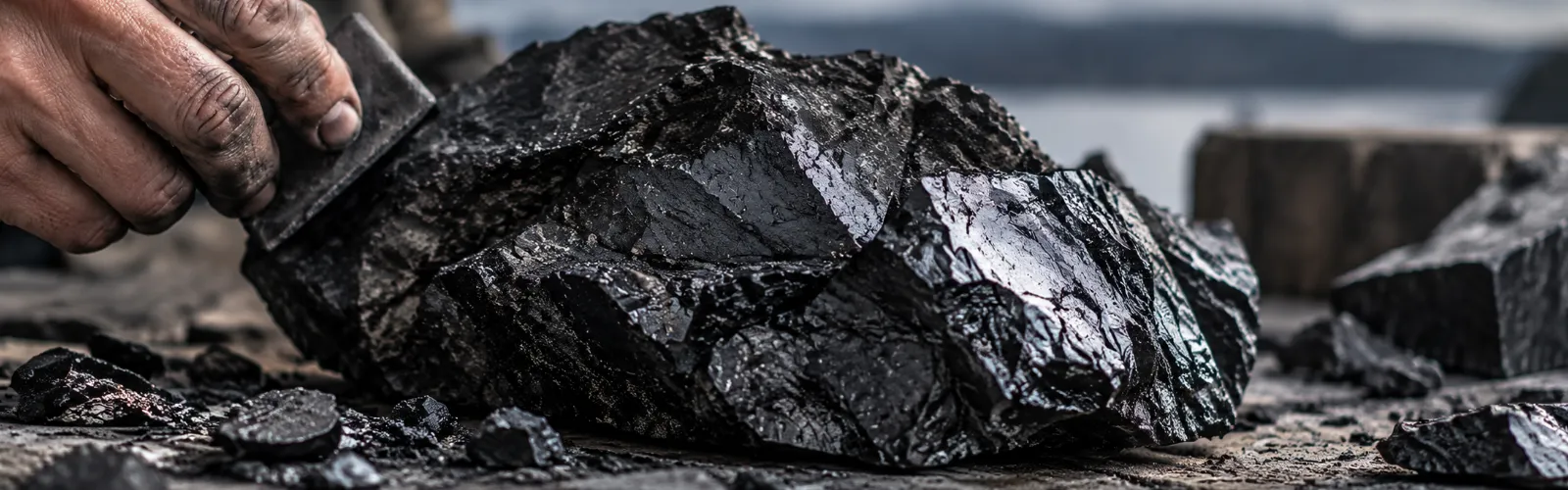
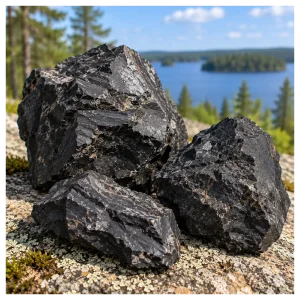 Shungite is a naturally occurring, carbon-rich rock found primarily in the Republic of Karelia in northwestern Russia. Some of the best-known deposits occur in the Lake Onega region, including around the village of Shunga, from which shungite gets its name.
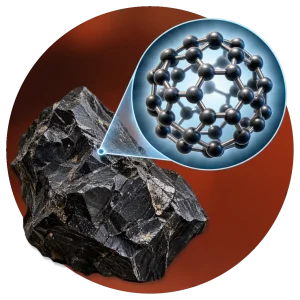 The best-known fullerene is C60, or
  Shungite, EMFs and the Torsion Field Effect
 Supporters of the practice attribute more than simple filtration to the process. Shungite water has traditionally been associated with cleansing and restorative qualities, while modern alternative-health explanations sometimes connect these effects with shungite’s unusual carbon structure and energetic properties.
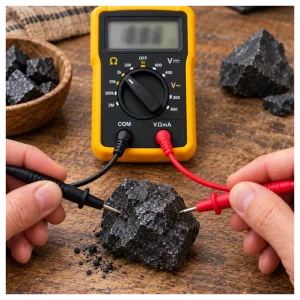 One of the easiest ways to test conductivity is with a multimeter. Set the meter to measure resistance and place the two probes against different points on the shungite. If the material is conductive, the meter should register a measurable resistance rather than behaving like an electrical insulator.
 For EMF protection, shungite is commonly placed near computers, Wi-Fi routers, televisions, and other electronic equipment. Small







2 Responses
It’s great that you discussed that shungite delivers excellent electrical conductivity. My friend wants to have shungite jewelry and accessories. I should advise her to turn to a shop that provides jewelry with high shungite properties.
This is a smartly written article on Shungite and you’ve covered the topic well. Fascinating read on an unusual subject.