What is the Purpose of the Bead on a Pendulum Cord?
Have you ever wondered what the purpose of the bead on a pendulum cord is? Although it may appear merely decorative, the bead serves several practical purposes that can influence how a pendulum responds during dowsing.
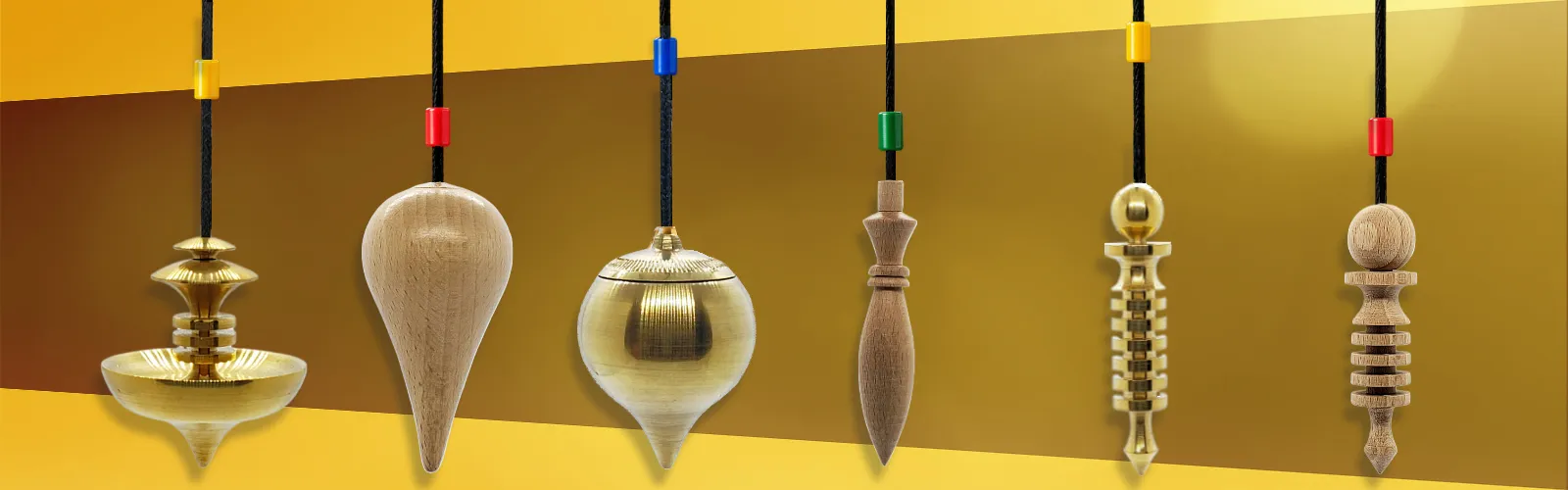
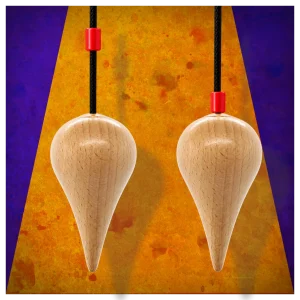
Many traditional brass and wooden pendulums feature a small, adjustable bead that slides along the suspension cord. By changing its position, the dowser can adjust the effective length of the cord, influencing the pendulum’s swinging motion and responsiveness.
Equally important, the bead acts as a bookmark, marking the dowser’s preferred holding position. Once you’ve discovered a cord length that produces comfortable, easily interpreted movements, the bead allows you to return to that same position each time you dowse.
Not all pendulums have this feature. Crystal pendulums, for example, are generally suspended from metal chains without adjustable beads. However, the principle remains the same: the length of the suspension can affect how a pendulum moves.
Understanding the purpose of the bead and how to adjust it can help you develop a more consistent and comfortable dowsing experience.
What Does the Bead on a Pendulum Cord Do?
The adjustable bead serves two important functions: it allows the dowser to change the effective length of the suspension cord and provides a convenient reference point for maintaining a preferred working length.
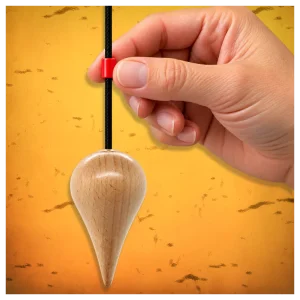
Adjusting the cord length changes the pendulum’s natural swinging motion:
-
Shorter cord: Produces a faster, more compact swing. Some dowsers prefer this for quicker, more responsive movements.
-
Longer cord: Produces a slower, more gradual swing, which may be easier to observe and interpret.
The relationship between cord length and swinging speed is also explained in The Physics Classroom’s guide to pendulum motion.
Neither length is necessarily better. The ideal adjustment depends on the pendulum’s weight, the dowser’s technique, and personal preference.
Marking your preferred position is equally valuable. Once you’ve found a cord length that feels comfortable and produces clear, consistent movements, the bead acts as a bookmark. You can return to that same position whenever you use your pendulum, rather than having to experiment with the cord length each time.
Some experienced dowsers also adjust the bead for different applications, choosing a shorter or longer suspension depending on the type of work they’re performing.
How to Adjust the Bead on Your Pendulum
Adjusting the bead on a pendulum cord is a simple process that allows you to discover the suspension length most comfortable for your dowsing practice.
Begin by holding the cord at the bead, allowing the pendulum to hang freely. Relax your hand and observe how the pendulum responds to your usual dowsing questions.
If the movement seems too slow or sluggish, slide the bead downward toward the pendulum to shorten the working length. If the movement feels too rapid or restricted, move the bead upward to lengthen the cord.
Experiment with different positions until you find a length that produces comfortable, easily observed movements. Once you’ve established your preferred position, leave the bead there as a reference for future dowsing sessions.
Remember that the bead doesn’t need to remain permanently in one position. You can adjust it whenever you wish, whether you’re experimenting with different techniques or simply refining your preferred working length.
The objective is to find a comfortable balance between the pendulum’s movement and your ability to interpret its responses.
Do All Dowsing Pendulums Need an Adjustable Bead?
Not all dowsing pendulums have an adjustable bead, nor is one necessary for successful dowsing. The bead is primarily a convenience, providing an easy way to adjust the suspension length and maintain a consistent holding position.
Many traditional brass and wooden pendulums feature a cord with an adjustable bead, while crystal pendulums generally use a metal chain without one.
With a chain pendulum, the dowser can adjust the working length simply by holding the chain at different points. However, unlike a cord fitted with a bead, there is usually no fixed marker indicating a previously preferred position.
If you prefer not to use the bead, simply slide it to the terminal end of the cord, away from the pendulum. You can then hold the cord at whatever length feels comfortable, just as you would with a pendulum suspended from a chain.
Ultimately, the choice between a cord with an adjustable bead and a chain comes down to personal preference. Both allow the dowser to experiment with different suspension lengths and develop a comfortable, consistent dowsing technique.
Whether you prefer the traditional design of a wooden pendulum, the precision craftsmanship of a brass pendulum, or the natural beauty of a crystal pendulum, familiarity with your instrument remains the most important consideration.