Learning how to test food using a pendulum can help you make more informed choices about the foods you eat. Whether you’re comparing fresh produce, packaged foods, or pantry staples, pendulum dowsing offers a simple way to evaluate vitality, energetic quality, and personal suitability. In this article, I’ll show you practical techniques for testing food with a pendulum and explain how to interpret your results with greater confidence.
Why Test the Vitality of Food?
The food we eat influences how we feel, think, and function every day. While nutritional labels provide useful information about vitamins, minerals, fats, proteins, and carbohydrates, many dowsers also choose to evaluate a food’s vitality or energetic quality. Testing food with a pendulum offers another way to explore which foods feel most supportive of your individual needs.
People use food dowsing for many reasons, including:
Identifying foods they believe have higher vitality or life force.
Comparing fresh, frozen, canned, and packaged foods.
Determining whether organically grown foods test differently from conventionally grown foods.
Exploring whether genetically modified (GMO) foods differ in energetic quality.
Evaluating whether herbicides, pesticides, or other agricultural practices appear to influence a food’s vitality.
Determining whether a particular food feels suitable for them at a given time.
Selecting between similar products before making a purchase.
Encouraging greater awareness of the foods they eat each day.
Supporting a more mindful and intentional approach to nutrition and well-being.
Rather than relying solely on general recommendations, pendulum dowsing encourages you to ask specific questions and develop a more personal relationship with your food choices. Whether you’re comparing apples, vegetables, grains, canned goods, or prepared meals, each test becomes another opportunity to learn what works best for you.
The Importance of Eating Foods with Life Essence
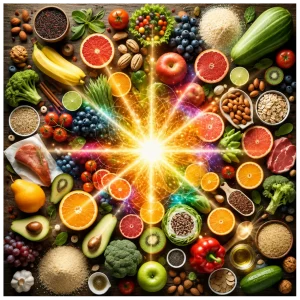
Many dowsers believe foods possess more than just vitamins, minerals, proteins, fats, and carbohydrates. They also believe foods carry a subtle life essence or vitality that reflects their overall energetic quality. While two foods may appear nearly identical, they may not always test the same with a pendulum.
Foods that test with a higher vitality are often thought to be fresher, less processed, and better able to support the body’s natural balance. Whether this difference results from growing conditions, storage, processing, agricultural practices, or other factors, many practitioners find that evaluating a food’s life essence provides another perspective when selecting what to eat.
Testing the vitality of food also encourages you to become more aware of the choices you make every day. You may discover that one variety of apple consistently tests higher than another, that freshly harvested vegetables test differently from those that have been stored for long periods, or that foods produced using different farming methods yield different results. Rather than relying solely on appearance or marketing claims, you ask more meaningful questions about the food you consume.
Ultimately, pendulum dowsing is about developing your own observations through careful testing. As your experience grows, you may find that choosing foods with higher life essence becomes another useful tool for supporting your overall health and well-being.
What Contributes to a Food's Life Essence?
Although a pendulum cannot tell us why food tests higher or lower, many dowsers believe that a food’s life essence reflects the combined qualities that make it nourishing and vibrant. Rather than representing a single characteristic, it may be viewed as an overall expression of the food’s vitality.
Several factors may influence how food tests, including:
Freshness after harvest.
Mineral content.
Enzyme activity.
Ripeness at the time of picking.
Soil quality and growing conditions.
Storage and transportation.
Processing methods.
Exposure to heat, preservatives, herbicides, or pesticides.
Natural deterioration over time.
For example, a freshly picked apple may test higher than one that has been stored for several months. While the stored apple may still provide nutritional value, changes in freshness, enzyme activity, and other characteristics could influence its overall vitality.
Pendulum dowsing does not identify which individual factor is responsible for a higher or lower reading. Instead, it evaluates the food as a whole, allowing you to compare one food with another or determine whether a particular food appears energetically suitable for you at that moment.
Many factors may contribute to a food's life essence. Dowsing evaluates the food as a whole rather than measuring any single characteristic.
The Importance of Minerals in Food
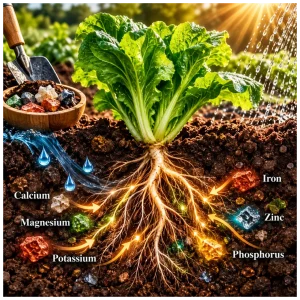
Minerals are essential for both plant growth and human health. Plants absorb minerals from the soil through their root systems, using them to support growth, photosynthesis, and the production of enzymes and other compounds that contribute to healthy development. The quality of the soil in which a plant is grown can therefore influence the quality of the food it produces.
Many dowsers believe that mineral-rich foods often test with higher vitality than foods grown in depleted soils. While a pendulum cannot identify the specific minerals present in a food, it may provide an overall assessment of the food’s energetic quality. For this reason, some practitioners compare foods from different growing regions, farming methods, or harvests to determine whether one tests more favorably than another.
Minerals also play an important role in human nutrition. Calcium, magnesium, potassium, copper, iron, zinc, selenium, and dozens of trace elements contribute to normal body functions, including bone health, muscle function, nerve transmission, oxygen transport, enzyme activity, and cellular metabolism. A varied diet containing mineral-rich foods helps support these natural processes.
From a dowsing perspective, minerals are only one factor that may contribute to a food’s overall life essence. Freshness, enzyme activity, soil quality, growing practices, storage conditions, and processing methods may also influence how food tests. Rather than measuring any single characteristic, pendulum dowsing evaluates the food as a whole.
Enzyme Activity and Food Vitality
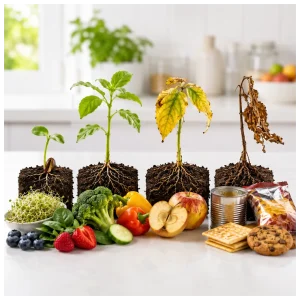
Enzymes are among the most important substances found in all living organisms. They are biological catalysts that make life possible by supporting thousands of chemical reactions in plants, animals, and the human body. In fresh foods, enzymes continue to function after harvest, contributing to natural ripening and other biological processes. As foods age, are cooked, exposed to heat, or undergo extensive processing, enzyme activity gradually declines.
Many dowsers regard enzyme activity as one of the clearest indicators of a food’s life essence. Fresh fruits, vegetables, sprouts, and fermented foods often test with higher vitality because they remain biologically active. In contrast, foods that have been stored for long periods or heavily processed frequently appear less vibrant and may test lower energetically. Although enzyme activity is only one factor influencing vitality, it is often considered an important marker of a food’s overall life essence.
Think of the difference between a young child and an elderly person. A child is growing rapidly, heals quickly, and is typically full of energy and vitality. As we age, many biological processes naturally slow down, and vitality gradually declines. In much the same way, freshly harvested foods are biologically active, while older or heavily processed foods often lose some of the characteristics associated with freshness and life.
When I dowse food, I don’t attempt to determine the exact enzyme content of food. Instead, I use the pendulum to evaluate its overall vitality. Food that tests strongly may owe its higher life essence to many contributing factors, including freshness, mineral content, enzyme activity, growing conditions, storage, handling, and processing. The pendulum does not separate these individual factors—it evaluates the food as a whole.
Holistic Perspective
Dr. Edward Howell’s Enzyme Nutrition introduced what became known as the Food Enzyme Concept, proposing that regularly eating fresh, enzyme-rich foods helps conserve the body’s own enzyme resources and supports long-term health and vitality. Although this theory remains the subject of ongoing discussion, it has had a lasting influence on holistic nutrition and continues to encourage many people to emphasize fresh, minimally processed foods. Readers interested in the history of this concept may wish to explore Howell’s book, “Enzyme Nutrition”.
How to Test Food Using a Pendulum Instructions
Testing food with a pendulum is a straightforward process that becomes easier with practice. The goal is not simply to determine whether a food is “good” or “bad,” but to compare foods, evaluate their vitality, and determine whether a particular food appears beneficial for you at that moment.
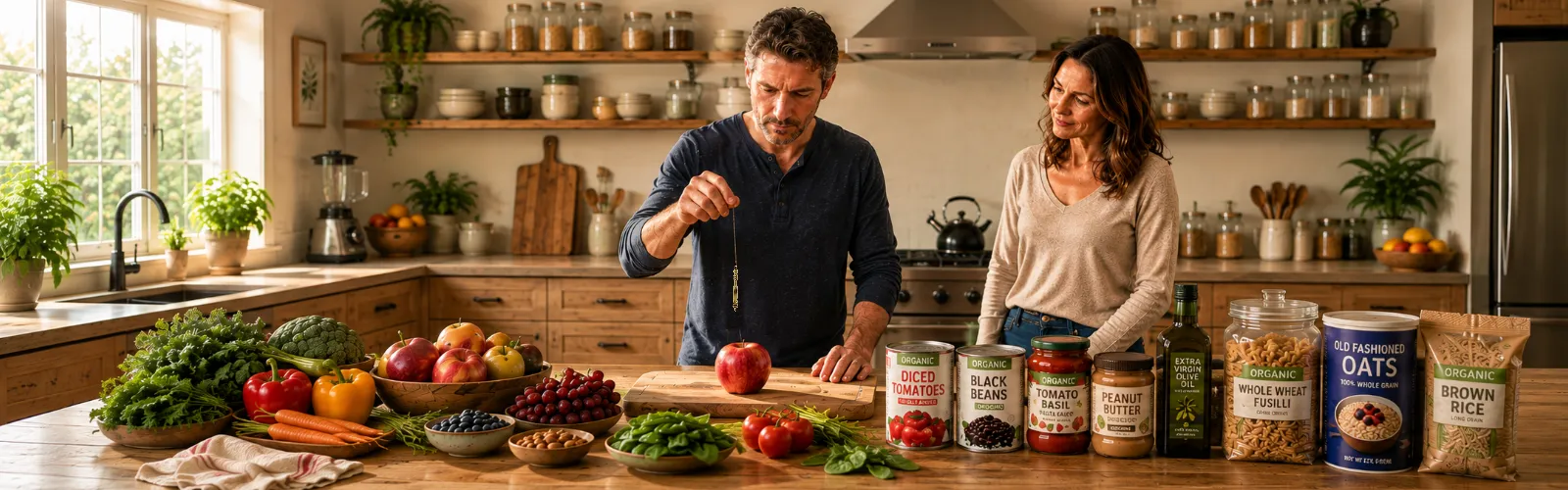
Place the food on a flat surface where you can comfortably hold the pendulum over it. If you are comparing foods, such as organic versus conventionally grown produce, or fresh versus canned foods, keep each item separate and test them individually.
2. Prepare Yourself and Your Pendulum
Before beginning, take a few moments to relax and clear your mind. A calm, focused state helps you ask clear questions without preconceived expectations.
Many practitioners also prefer to clear their pendulum before each session. Depending on your personal practice, this may include visualization, smudging, placing the pendulum on salt, or using a Crystal Tuner Tuning Fork for crystal pendulums. While every dowser develops their own routine, consistency often produces the most reliable results.
3. Confirm Your Pendulum Responses
If you have already established your pendulum’s responses for Yes, No, and Uncertain, you can move directly to testing.
If not, begin by asking simple questions whose answers you already know.
For example:
“Show me my Yes.”
“Show me my No.”
“Show me my uncertain response.”
Allow the pendulum to establish its natural movements before testing food.
4. Test the Food’s Overall Vitality
Hold the pendulum comfortably over the food and ask one clear question at a time.
For example:
“Is this food beneficial for me?”
“Does this food have good life essence?”
“Does this food test positively?”
Avoid asking two questions in one, such as:
“Is this food high or low in vitality?”
Instead, ask one precise question and allow the pendulum to respond.
If I receive a positive (clockwise) response, I also observe the strength of the movement. Large, confident circles generally indicate stronger vitality, while smaller circles may suggest a weaker positive response.
5. Estimate the Food’s Vitality
After determining that a food tests positively, I like to estimate its vitality using percentages.
For example:
“Is the vitality greater than 10%?”
“Greater than 20%?”
“Greater than 30%?”
Continue increasing the value until the pendulum no longer gives a positive response.
If my pendulum reverses between 70% and 80%, I return and fine-tune the answer by asking:
“Is it 71%?”
“72%?”
“73%?”
until I determine the approximate vitality of the food.
This percentage isn’t intended as a scientific measurement. Rather, it provides a practical way to compare one food with another using a consistent personal scale.
6. Compare Similar Foods
One of the most useful applications of pendulum dowsing is comparing foods.
For example, you might compare:
Organic versus conventionally grown produce.
Freshly harvested versus stored produce.
Homemade versus commercially processed foods.
One brand of food versus another.
Test each item separately using the same questions and compare the strength of the responses.
7. Ask Whether the Food Is Right for You
A food may test with excellent vitality and still not be the best choice for your body.
For example, you may have:
a food sensitivity or allergy,
an intolerance,
a reaction to preservatives, herbicides, or pesticides,
or another factor affecting your suitability.
After determining the food’s vitality, ask a final question such as:
“Will this food benefit me today?”
This final step recognizes the difference between a food’s overall life essence and its personal suitability for you.
Take Notes
As you’ve seen throughout this article, testing foods with a pendulum can be as simple or as detailed as you choose to make it. Each answer often leads to another question, gradually uncovering new layers of information. For this reason, I highly recommend keeping a notebook or dowsing journal during your sessions.
Record the questions you ask, the pendulum’s responses, and any additional observations or impressions that come to mind. Having a written record allows you to review your findings later, repeat a particular test if necessary, and compare foods under different conditions.
When I dowse, I write with my left hand while holding the pendulum in my right. I record the questions, note the responses, and add observations as they arise. Over time, this creates a natural flow of dialogue that often leads to deeper insights and more consistent, reliable results.
Good notes are especially helpful when comparing foods at a grocery store, farmers’ market, or health food store. Rather than trying to remember every question, prepare a list before you go. You can then concentrate on your pendulum work while using your notes as a guide. This makes the testing process more efficient and less distracting, especially when there are many products to compare.
Finally, remember that dowsing reflects the circumstances at the time the questions are asked. A food that tests highly one day may not produce exactly the same response later. Freshness changes after harvest; foods continue to age, growing conditions vary from season to season, and your own nutritional needs and sensitivities can also change. By keeping dated notes, you can review previous sessions, compare results over time, and observe how both foods and your own responses evolve.
Vitalize Food and Beverages Using the ADR-4 Revitalizer Plate
One of the most interesting applications of pendulum dowsing is comparing the vitality of foods and beverages before and after they have been placed on the ADR-4 Revitalizer Plate. By testing food before revitalization and then testing it again afterward, you can determine whether its energetic vitality has changed and whether that change is reflected in your pendulum readings.
The ADR-4 Revitalizer Plate is designed to increase the biological life force of substances that contain water as part of their natural composition.
Water is an excellent place to begin your own experiments. Because it is easy to get, simple to test, and forms the basis of nearly every food and beverage we consume, it provides a convenient way to compare pendulum readings before and after revitalization. Once you become familiar with the process, you can expand your testing to fruits, vegetables, juices, herbs, nutritional supplements, and other biological substances.
In addition to foods and beverages, it can also be used with herbs, tinctures, nutritional supplements, and many other biological substances.
From my experience, not all foods begin with the same energetic vitality. Freshness, growing conditions, mineral content, processing methods, storage, transportation, and age can all influence how food tests with a pendulum. Even two apples that appear identical may produce noticeably different vitality readings.
The process is straightforward. First, test the food and record its vitality using either a percentage scale or a scale from 1 to 10. Next, place the food or beverage on the ADR-4 Revitalizer Plate for the recommended period of time. Finally, repeat the same dowsing test and compare the new reading with your original results.
One of the advantages of this approach is that it allows you to evaluate the results for yourself rather than relying solely on theory. Try comparing fresh fruit, vegetables, juice, coffee, tea, milk, or bottled water before and after revitalization. You may also wish to compare fresh foods with frozen, canned, or heavily processed alternatives. Recording your before-and-after readings provides valuable insight into how different foods respond to revitalization.
Whether you are selecting foods for yourself or working with clients in a professional practice, the ADR-4 Revitalizer Plate provides another tool for exploring the energetic qualities of the foods and beverages you consume. Used together with pendulum dowsing, it offers a practical method for comparing foods, documenting changes in vitality, and making more informed dietary choices.
Ultimately, I encourage you to perform your own experiments. Test a food or beverage before revitalization, record the results, revitalize it using the ADR-4 Revitalizer Plate, and then test it again. Keep careful notes and compare your findings over time. There is no substitute for personal experience, and your own observations will become the most valuable guide in developing confidence in both your dowsing skills and your understanding of food vitality.
A Personal Observation
Over the years, I’ve performed many before-and-after comparisons using both a pendulum and the ADR-4 Revitalizer Plate. One experiment I found particularly interesting involved microwave ovens.
On several occasions, foods that initially tested positive with the pendulum produced a negative (counter-clockwise) response after being heated in a microwave oven. I then placed the same food on the ADR-4 Revitalizer Plate and tested it again. In many cases, the food once again produced a positive response, although it sometimes tested lower than it had before being microwaved.
These observations come from my own dowsing experience and are offered as an invitation to experiment rather than as a conclusion. Try testing foods before heating, after microwaving, and again after revitalization. Record your results and compare your observations over time. There is no substitute for your own experience.
Final Thoughts
Learning how to test food using a pendulum is about more than simply assigning a percentage or comparing one food with another. It is a practical way to become more aware of the quality of the foods you eat and to explore how freshness, mineral content, enzyme activity, growing methods, processing, storage, and personal suitability may influence your choices.
As with any skill, confidence develops through practice. Start by testing a few familiar foods, record your observations, and compare your results over time. You may discover differences between fresh and stored produce, organic and conventionally grown foods, or foods before and after cooking or revitalization. Every question you ask adds to your own experience and understanding.
Remember that pendulum dowsing is a personal tool for exploration rather than a replacement for sound judgment, common sense, or good nutritional practices. The real value comes from asking clear questions, keeping accurate notes, and remaining open to learning from your own observations.
Whether you are testing an apple from your garden, comparing foods at the grocery store, or experimenting with the ADR-4 Revitalizer Plate, each session provides another opportunity to deepen your dowsing skills and better understand the energetic qualities of the foods you consume.
Most importantly, let your own experience become your greatest teacher. Over time, you will develop greater confidence in your pendulum responses, recognize meaningful patterns, and discover a testing method that is uniquely your own.
PendulumsPlus
PendulumsPlus has been helping people explore dowsing, energy work, and complementary wellness for decades. We offer a carefully selected range of pendulums, dowsing rods, tuning forks, EMF protection products, shungite, and other specialty tools, supported by practical articles that share years of hands-on experience to help readers learn with confidence and make informed choices.
The Difference Between Dowsing and Divining I’ve often wondered: is there a difference between dowsing and divining? Do the terms mean the same thing, or are there subtle differences that set them apart? The two terms are frequently used interchangeably, and historically the distinction between them isn’t always clear. Yet, as a dowser, I’ve never felt that they describe quite
Locate Lost Items Using a Pendulum Losing something such as a wallet, set of keys, piece of jewelry, or important document can be frustrating—particularly when you’ve searched all the obvious places and still can’t find it. A pendulum offers another way of approaching the search. Rather than wandering from room to room hoping to spot the missing item, dowsing allows
How to Test Herbs Using a Pendulum In my previous blog post, we explored the intriguing world of testing vitamins with a pendulum. While vitamins and herbs are both widely used to support health, learning how to test herbs using a pendulum deserves its own discussion. Herbs are complex natural substances with unique energetic properties, making the dowsing process quite
How to Test Vitamins Using a Pendulum Many people use a pendulum to test vitamins as part of their personal wellness routine. Rather than choosing supplements based solely on general recommendations, pendulum dowsing offers a way to evaluate which vitamins, minerals, and nutritional supplements may be most suitable for you at a particular time. This approach is based on the
How to Predict Baby Gender Using a Pendulum Expectant parents are often curious about the gender of their unborn baby. Whether the curiosity is simply for fun or part of a family tradition, many methods have been used over the years to predict whether a baby is a boy or a girl. While modern medical techniques provide the most reliable
Are Dowsing Rods Magnetic? Dowsing rods have been used for centuries to search for underground water, minerals, buried objects, and other targets. Yet one question continues to cause confusion: are dowsing rods magnetic, and is magnetism responsible for the way they move? Most traditional dowsing rods are not magnetic. They may be made from brass, copper, stainless steel, wood, or

 The food we eat influences how we feel, think, and function every day. While nutritional labels provide useful information about vitamins, minerals, fats, proteins, and carbohydrates, many dowsers also choose to evaluate a food’s vitality or energetic quality. Testing food with a pendulum offers another way to explore which foods feel most supportive of your individual needs.
 Many dowsers believe foods possess more than just vitamins, minerals, proteins, fats, and carbohydrates. They also believe foods carry a subtle life essence or vitality that reflects their overall energetic quality. While two foods may appear nearly identical, they may not always test the same with a pendulum.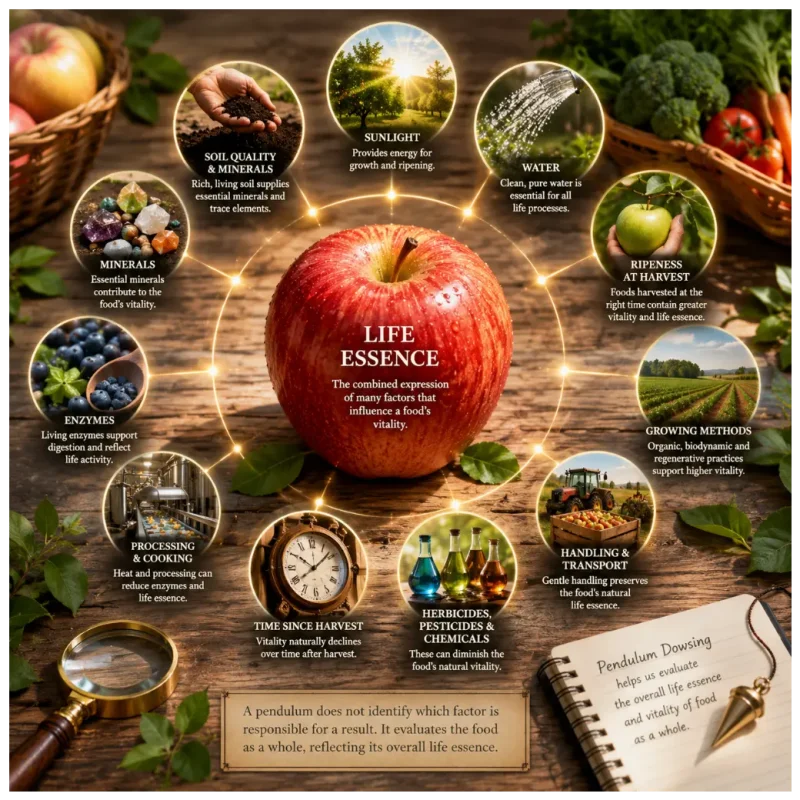
 Enzymes are among the most important substances found in all living organisms. They are biological catalysts that make life possible by supporting thousands of chemical reactions in plants, animals, and the human body. In fresh foods, enzymes continue to function after harvest, contributing to natural ripening and other biological processes. As foods age, are cooked, exposed to heat, or undergo extensive processing, enzyme activity gradually declines.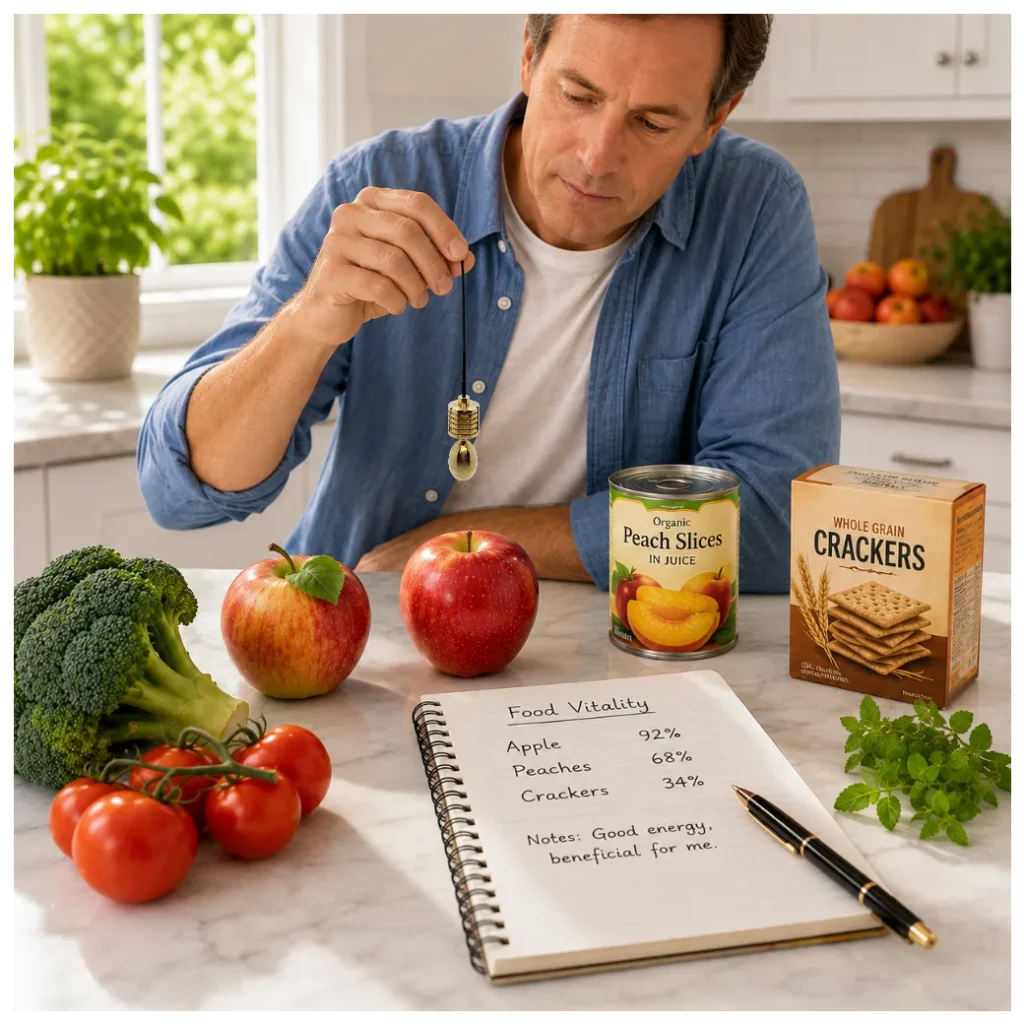
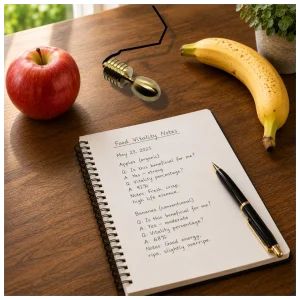 As you’ve seen throughout this article, testing foods with a pendulum can be as simple or as detailed as you choose to make it. Each answer often leads to another question, gradually uncovering new layers of information. For this reason, I highly recommend keeping a notebook or dowsing journal during your sessions.
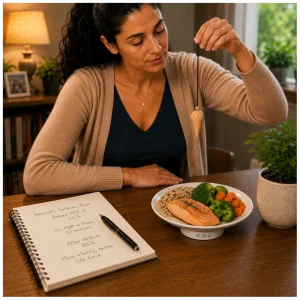 One of the most interesting applications of pendulum dowsing is comparing the vitality of foods and beverages before and after they have been placed on the
 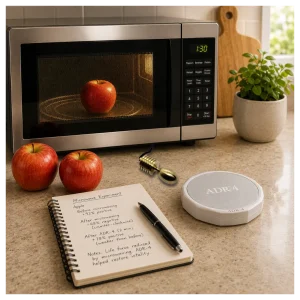 Over the years, I’ve performed many before-and-after comparisons using both a pendulum and the ADR-4 Revitalizer Plate. One experiment I found particularly interesting involved microwave ovens.