

How to Use a Bobber.

How to Use a Bobber Dowsing Rod

Dowsing has been used for centuries to search for hidden resources such as underground water and minerals, as well as to obtain answers to questions. While pendulums, L-rods, and Y-rods are among the better-known dowsing tools, the bobber dowsing rod offers a very different way of receiving a response.

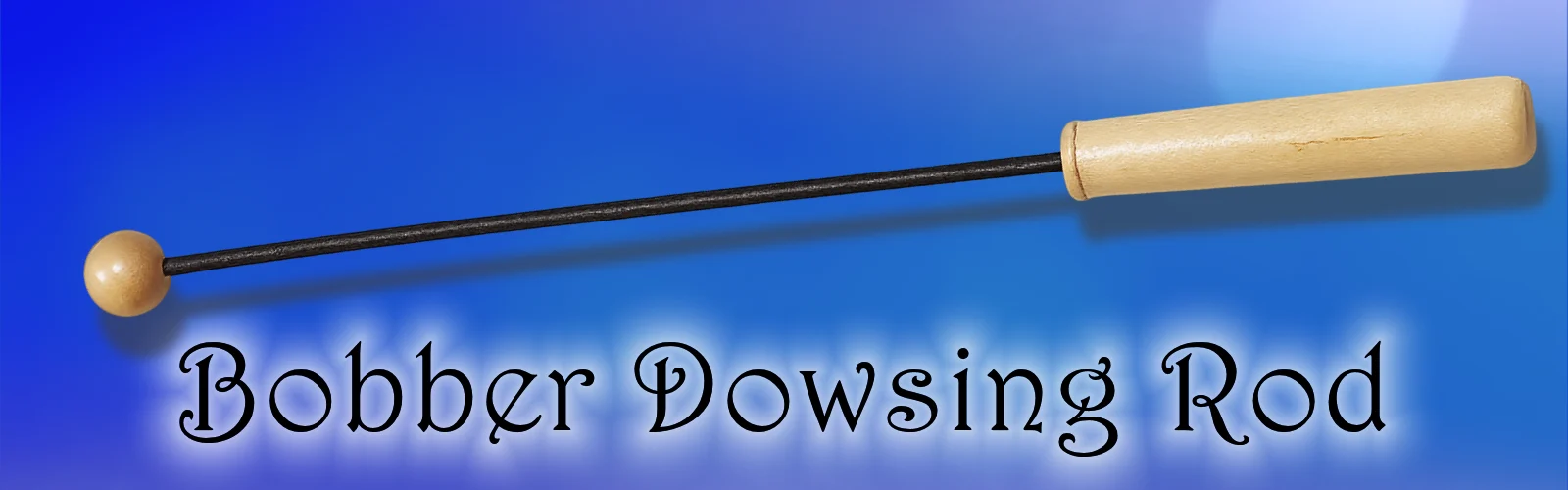
A bobber consists of a handle attached to a long, flexible shaft, usually with a weight, ball, ring, or other terminal at the end. Unlike the more rigid movement of an L-rod, the flexible shaft allows a bobber to bounce up and down, move from side to side, rotate, or produce other easily recognized movements. The dowser can assign these movements particular meanings, such as yes, no, ready, or uncertain, before beginning a session.

Bobbers are responsive and relatively easy to learn, making them an interesting choice for both beginners and experienced dowsers. As with other forms of dowsing, however, developing consistent responses takes practice. Learning how your bobber moves, establishing clear response signals, and asking precise questions can make a considerable difference in your results.

Choosing a Bobber Dowsing Rod

Bobber dowsing rods come in different lengths, weights, and degrees of flexibility. These differences can affect how quickly the bobber responds and the range of movement it produces.

A lightweight, flexible shaft generally responds quickly and allows a greater range of movement, making the bobber’s signals easy to recognize. A heavier or stiffer shaft may be less flexible and slower to respond, although some dowsers may prefer the feel of a heavier bobber or handle. The overall balance is also important: the weight of the handle, flexibility of the shaft, and terminal weight should work together so the bobber moves freely and comfortably.

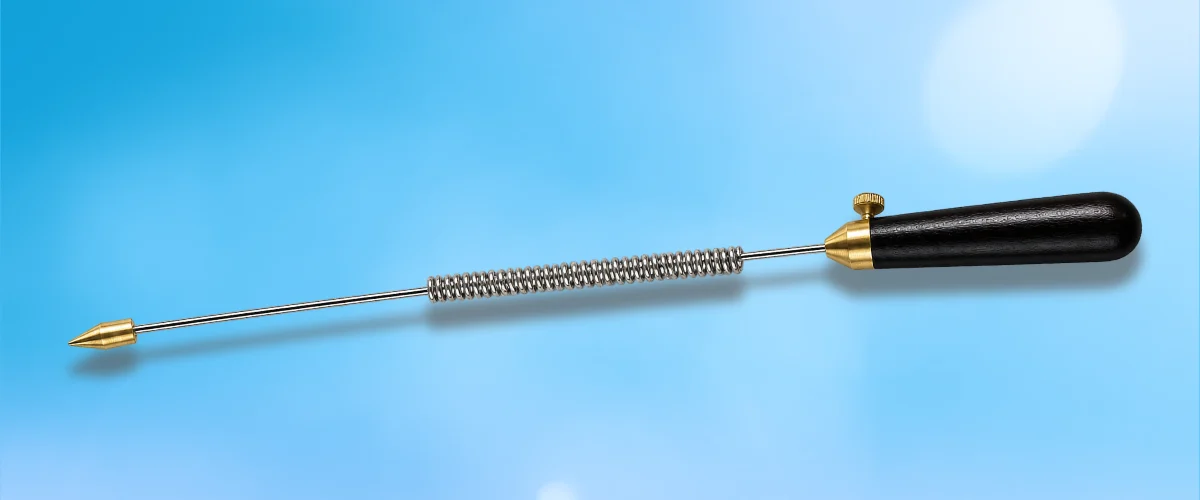
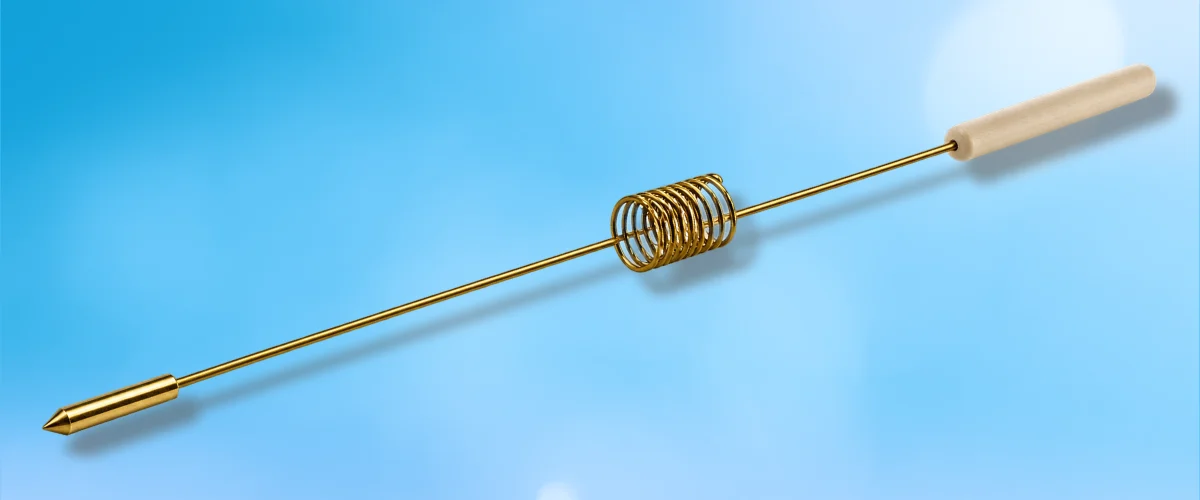
Some bobbers incorporate a coil or spring into the shaft rather than relying entirely on a single length of flexible wire. The coil adds spring action and can accentuate the bobber’s movement, allowing it to oscillate more readily and produce a lively, highly visible response. The size, length, and tension of the coil can also influence the speed and range of movement. This gives a coil-type bobber, such as the Auraspring or Biotensor, a noticeably different feel and action from a conventional flexible-wire bobber.

Other bobbers are also adjustable. The shaft passes through a hollow handle and can be shortened or extended, then secured in position with a small screw. Changing the exposed length of the shaft alters the way the bobber responds. A shorter shaft generally produces a quicker, tighter response, while extending the shaft allows a broader movement and may slow the response.

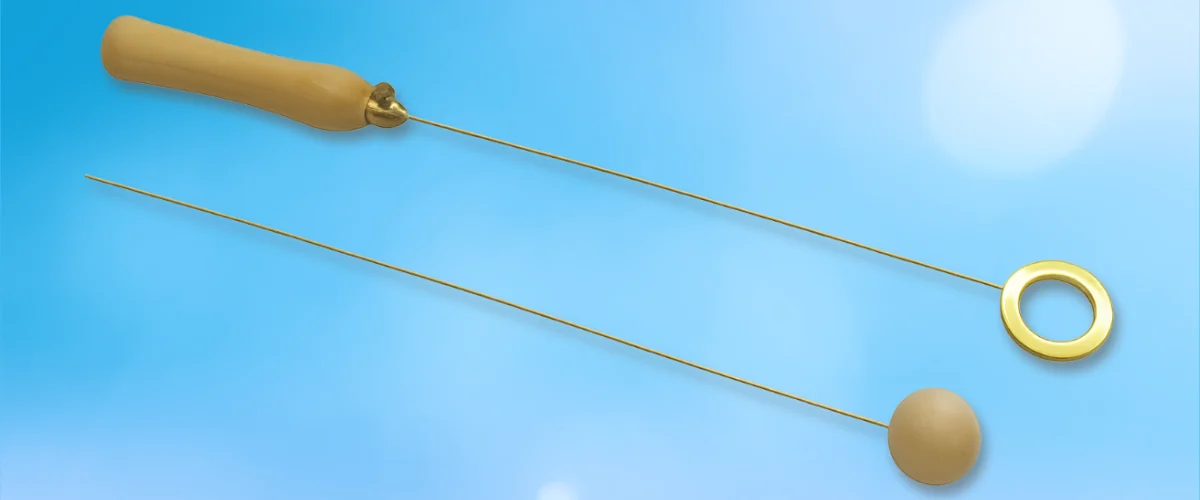
Finally, some adjustable bobbers also offer interchangeable shafts or terminal ends, allowing you to further change the action of the tool. For example, a lightweight wooden ball produces a different feel and response from a heavier brass washer. I find the heavier washer particularly easy to read across different axes, including up-and-down, side-to-side, clockwise, and counterclockwise movements. Experimenting with shaft length and different terminal weights can help you find the combination that gives you the clearest and most natural response.

This is somewhat like adjusting the working length of a pendulum. Some pendulums have a bead on the cord that marks a preferred holding point. Changing the working length can alter the speed and responsiveness of the pendulum, just as changing the exposed shaft length can alter the action of an adjustable bobber.

Different Types of Bobbers

Bobbers are available in several designs, ranging from a simple flexible-shaft bobber to more specialized models incorporating coils, adjustable shaft lengths, or interchangeable terminals. PendulumsPlus carries several examples, including the Simple Bobber, Auraspring, Biotensor, and Bobber Pro. Each has a somewhat different action and feel, so experienced dowsers may develop a preference for one design over another. The Aurameter can also function as a bobber, but its unique design allows it to perform five different functions, making it a more specialized dowsing tool that deserves a separate discussion.

Adjustable Biotensor Bobber Dowsing Rod.
Adjustable Biotensor Bobber Dowsing Rod

What are Bobbers Used For?

Bobbers are versatile dowsing instruments that can be used for a wide variety of tasks. Like other dowsing rods, they are generally more convenient to use while standing or walking than a pendulum, which makes them particularly useful when searching an area. At the same time, bobbers are small and lightweight enough to use comfortably while sitting. You simply need enough horizontal space for the shaft to extend and move freely.

There are few practical limitations on how a bobber can be used. It can be used for yes-or-no questions, comparing choices, locating objects or other targets, checking energy fields and auras, and exploring many of the same questions you might investigate with a pendulum. Its ability to respond up and down, from side to side, diagonally, or in circular movements can also provide a broader range of signals than a simple yes-or-no response.

Ultimately, the applications depend largely on the dowser and the type of information being sought. Once you have established clear response signals and become familiar with the movement of your particular bobber, you can adapt it to many different dowsing situations.

Programming Your Bobber

Before using a bobber for dowsing, it is helpful to establish—or “program”—the movements that will represent different responses. This gives you a consistent set of signals to work with.

A bobber may move up and down for yes and side to side for no, but these are not the only movements it can make. Depending partly on the flexibility of the shaft and the type of terminal point, a bobber may also move in a clockwise or counterclockwise circle, diagonally, or in other directions. This wider range of movement is one of the characteristics that makes a bobber such a responsive dowsing tool.

Hold the bobber lightly and comfortably, allowing the shaft to move freely. Ask, “Show me yes,” and observe the response. Allow the bobber to settle, then ask, “Show me no.” Repeat each request several times to see whether the responses remain consistent.

It is also useful to establish signals beyond yes and no. Ask your bobber, “Show me neutral,” “Show me waiting,” or “Show me no information forthcoming.” You may also want a signal for uncertain, not ready, or rephrase the question.

Not every dowsing question will produce a simple yes-or-no response. At times, your bobber may move in an unexpected direction or produce a movement you have not previously assigned a meaning to. Rather than automatically interpreting it as yes or no, stop and determine what that response means for you. This is similar to working with a pendulum, where a diagonal or unusual movement may indicate something other than the established yes-or-no signals.

The particular movements are less important than establishing responses that are clear, distinct, and consistent. As you become familiar with your bobber, you may develop a broader vocabulary of movements that provides more information than a simple yes or no.

Auraspring Bobber Dowsing Rod.
Auraspring Bobber Dowsing Rod

The Importance of Asking Precise Questions

The quality of your dowsing responses can depend greatly on the quality of the questions you ask. Vague questions can produce vague or misleading answers, while carefully worded questions help define exactly what information you are seeking.

For example, rather than asking, “Is there water nearby?” you could ask, “Is there a source of drinkable water within 100 feet of where I am standing?” If the response is yes, you can continue narrowing the search by asking about direction, distance, depth, quantity, or other characteristics that are important to you.

Be particularly careful with words that can have more than one meaning. Terms such as nearby, suitable, good, enough, or soon are open to interpretation. Whenever possible, replace them with measurable conditions or clearly defined criteria.

Before relying on your bobber for an unknown answer, you can also ask several simple questions for which you already know the answers. This gives you an opportunity to confirm that your established yes, no, neutral, and other response signals are working consistently before proceeding.

Just as important is maintaining a neutral attitude toward the answer. Try not to anticipate or consciously influence the response you want to receive. Ask the question clearly, remain relaxed, and allow the bobber to respond without forcing its movement. If you are strongly attached to a particular outcome, stop, reset, and approach the question again when you can remain more neutral.

Interpreting the Results

Once you have established your bobber’s response signals, pay attention to both the direction and strength of its movement. A vigorous up-and-down or side-to-side movement can indicate a strong or certain response, while a weak or hesitant movement may indicate less certainty. If you receive a weak response, try rephrasing the question more precisely. A better-defined question will sometimes produce a much clearer and stronger response.

There may also be more than one correct answer to a question, with some possibilities producing stronger responses than others. In this way, the degree of movement can sometimes help you compare choices rather than simply provide a yes-or-no answer.

Every bobber has its own physical characteristics. The length, weight, stiffness, and flexibility of the shaft, as well as the terminal weight or coil construction, will influence its normal range of movement. A highly flexible bobber may naturally produce much larger movements than a stiffer one. As you become familiar with your particular bobber, you learn its normal behavior and can better recognize when a response is unusually strong, weak, or uncertain.

This is similar to interpreting a pendulum. For example, if your established yes response is a clockwise circle, a large, sustained circle may represent a clear response, while a small or diminishing circle may indicate a weaker response or even begin transitioning toward another signal. With a bobber, the vigor and range of its movement can provide similar additional information.

If the bobber produces an unexpected movement, don’t automatically force it into a yes-or-no interpretation. Return to neutral, consider what the movement might represent, and if necessary, rephrase the question. With experience, these variations can become part of the individual response language you develop with your bobber.

Bobber Pro with adjustable handle and interchangeable wooden ball and brass washer.
Bobber Pro – Adjustable with Interchangeable Shafts

Final Thoughts

A bobber dowsing rod is a simple but highly responsive tool. Its flexible shaft can produce a wide range of movements, while differences in shaft length, flexibility, coils, terminal weights, and adjustable features allow you to choose a bobber that suits your individual dowsing style.

The key is to become familiar with your particular bobber. Establish clear response signals, ask precise questions, remain neutral about the outcome, and pay attention to both the direction and strength of its movements. With practice, you may find that your bobber develops a much broader response language than simply yes or no.

As with any form of dowsing, experience is the best teacher. Experiment, verify your results whenever possible, and learn how your own bobber responds under different circumstances.

Leave a Reply

Your email address will not be published. Required fields are marked *