Are Dowsing Rods Magnetic?
Dowsing rods have been used for centuries to search for underground water, minerals, buried objects, and other targets. Yet one question continues to cause confusion: are dowsing rods magnetic, and is magnetism responsible for the way they move?
Most traditional dowsing rods are not magnetic. They may be made from brass, copper, stainless steel, wood, or even plastic, and the rod does not need to be magnetic to be used for dowsing. This raises a more interesting question: if magnetism isn’t pulling the rods, what causes them to move?
Conventional science generally attributes the movement to small, unconscious muscular actions known as the ideomotor response. Many experienced dowsers agree that subtle movements of the hands can physically move the rods, but differ over what initiates that response. They may regard the rods as indicators that amplify a response received through the dowser rather than as magnetic detectors themselves.
In this article, we’ll separate these questions and look at the materials dowsing rods are made from, magnetism, the ideomotor response, the dowser’s perspective, and how dowsing rods differ from instruments such as metal detectors.
Traditional Dowsing Rods Are Not Magnetic
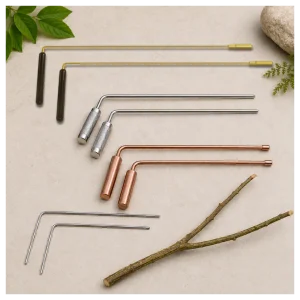
Traditional dowsing rods do not need to be magnetic. L-rods are commonly made from materials such as brass, copper, or stainless steel, while Y-rods have traditionally been made from flexible branches such as willow or hazel and are now also available in synthetic materials.
Some metals used for dowsing rods are electrically conductive, but electrical conductivity and magnetism are not the same thing. A brass or copper L-rod, for example, does not behave like a magnet simply because it conducts electricity. Nor does it need to be attracted to a magnetic object in order to move during dowsing.
This is an important distinction because the movement of a dowsing rod originates at the point where the dowser is holding it. With an L-rod, even a very small rotation of the hand or handle can produce a much larger movement at the end of the long horizontal shaft. A Y-rod can similarly amplify small changes in hand and arm tension.
Conventional scientific explanations attribute these subtle, often unconscious movements to the ideomotor response. However, identifying the physical movement of the hands does not necessarily settle the larger question of dowsing. Many dowsers regard the rod as an indicator or amplifier, rather than the instrument that actually detects the target. We’ll look more closely at both interpretations in the next section.
If Dowsing Rods Aren't Magnetic, Why Do They Move?
Anyone who has used a pair of L-rods knows how easily they can swing, cross or separate with very little apparent effort. A Y-rod can produce an equally noticeable response, sometimes dipping or rising quite suddenly. If the rods aren’t being pulled by magnetism, what causes this movement?
At the physical level, the answer is fairly straightforward: movement of the rod begins with movement of the dowser’s hands, wrists or arms. What is less straightforward—and where scientific and dowsing interpretations differ—is what causes those movements to occur.
The Ideomotor Response
The conventional scientific explanation for dowsing-rod movement is known as the ideomotor response. This refers to small muscular movements that can occur without a person being consciously aware that they are making them. Expectations, thoughts, and anticipation can all contribute to these involuntary movements.
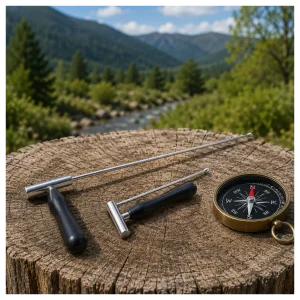
Dowsing rods are particularly good at making very small movements visible. An L-rod is balanced so that it can rotate freely in the hand or handle. A slight change in hand position can therefore cause the long horizontal shaft to swing through a much greater distance. With a Y-rod, subtle changes in the tension applied by the hands and arms can similarly produce a pronounced movement at the tip.
In actual field dowsing, rods are rarely held perfectly motionless. The dowser may walk over uneven ground while the rods naturally oscillate in response to normal body movement. Experienced dowsers learn to distinguish this background movement from a more definite response, such as the rods crossing, opening, or turning at a particular location. The presence of unconscious muscular movement therefore helps explain how the rods can move, but does not by itself establish why a distinct response occurs when and where it does.
From the conventional scientific perspective, this provides an explanation for why a rod may seem to move on its own. The dowser does not have to deliberately turn the rod; an unconscious muscular movement can be sufficient.
However, demonstrating how the rod physically moves does not necessarily answer why the unconscious movement occurred at that particular moment. This is where the scientific explanation and the interpretation of many experienced dowsers begin to diverge.
The Dowser’s Perspective
Many dowsers accept that unconscious muscular movements may be involved in producing the visible response of a dowsing rod. Where they differ from the conventional explanation is in regarding those movements as the entire explanation for dowsing.
From this perspective, the rod is not necessarily the detector. Instead, the dowser is considered part of the detecting system, while the rod acts as an indicator or amplifier that makes a subtle response easier to observe. A small unconscious change in the hands may cause the rod to move, but the dowser may interpret that movement as a response to water, an underground object, an environmental influence or the particular question being asked.
Some dowsers describe this in terms of intuition, sensitivity to subtle energies, or information received through the subconscious. These interpretations have not been established scientifically, and there is no generally accepted scientific mechanism showing that a dowser can detect such information in this way.
This leaves an important distinction. The ideomotor response offers a plausible mechanism for the physical movement of the rods, but dowsers and conventional science disagree about whether it fully explains the information that dowsers believe they obtain while using them.

Do Dowsing Rods Respond to Magnetic Fields?
Although most dowsing rods are not themselves magnetic, that raises a related question: could an external magnetic field still influence them?
The answer depends partly on what the rod is made from. A rod containing a strongly magnetic material such as iron or some types of steel can physically respond to a sufficiently strong nearby magnetic field. Brass and copper, however, are not ferromagnetic and will not be attracted to an ordinary magnet in the way that iron or mild steel will.
This is different from claiming that Earth’s magnetic field, underground water or buried objects exert a magnetic force that causes ordinary dowsing rods to cross or turn. There is no well-established scientific evidence showing that this is the mechanism responsible for dowsing-rod movement.
Some dowsers nevertheless report responses near electrical equipment, underground cables, geological features and other environmental influences. Such observations are sometimes described in terms of electromagnetic fields or subtle energies. These experiences may be meaningful to the dowser, but they should not automatically be interpreted as evidence that the rod itself is detecting magnetism.
This brings us back to an important distinction: a dowsing response and a magnetic response are not necessarily the same thing. Even if a dowser obtains a rod reaction near something associated with an electromagnetic field, that alone does not establish what caused the reaction.
Dowsing Rods vs. Metal Detectors
Dowsing rods and metal detectors are sometimes compared because both may be used when searching for something hidden underground. However, they operate in fundamentally different ways and may not always be searching for the same type of information.
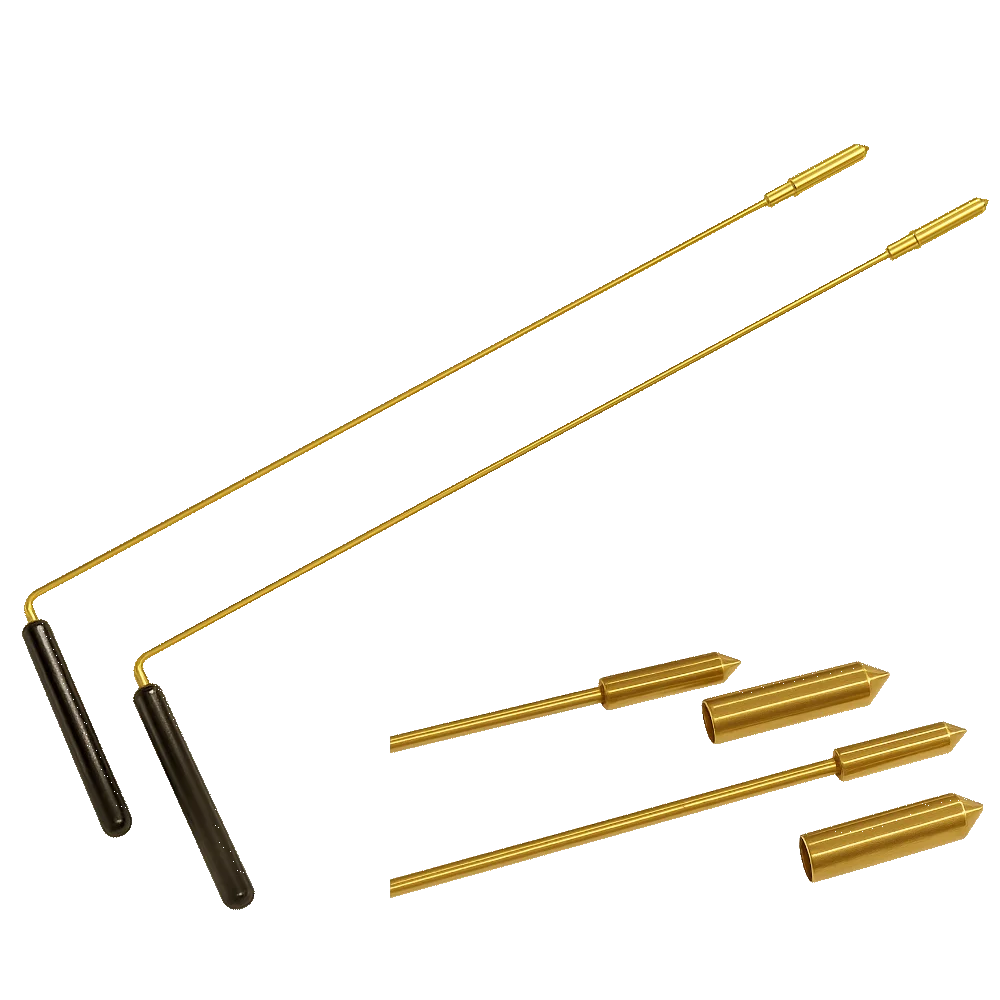
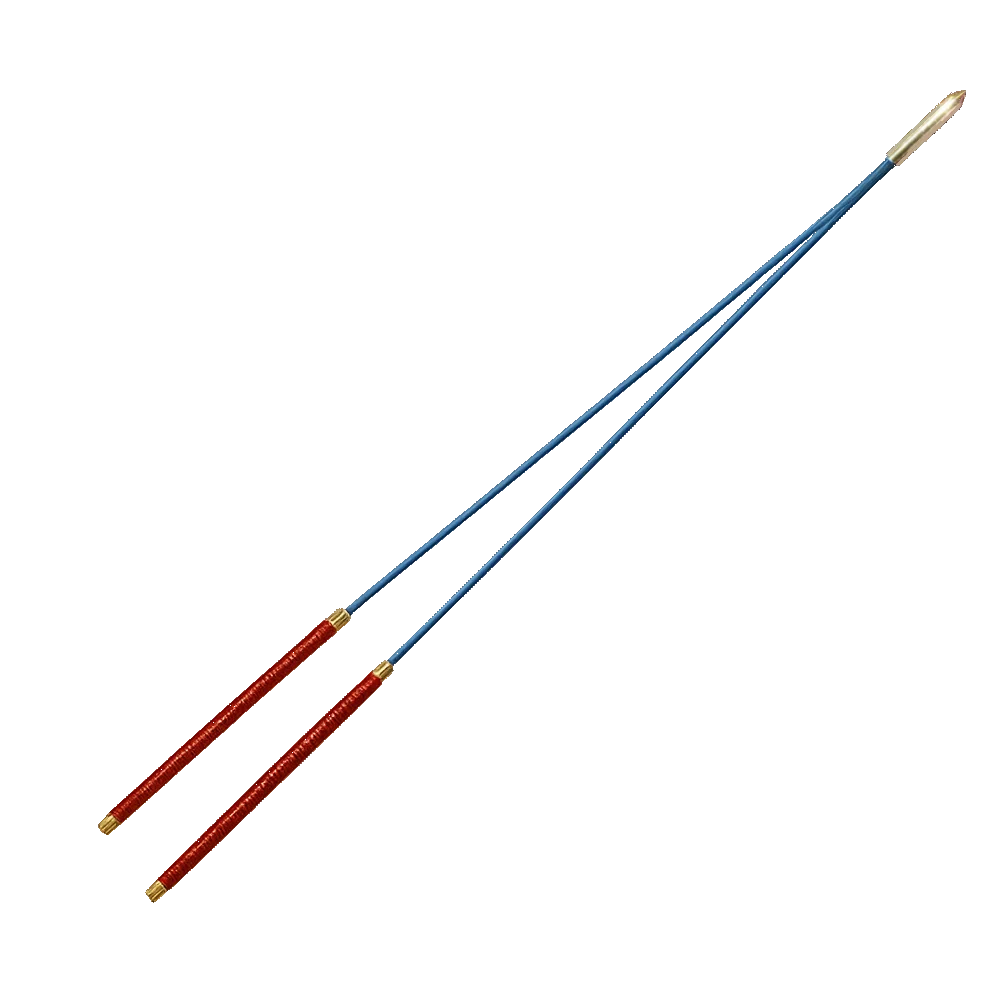
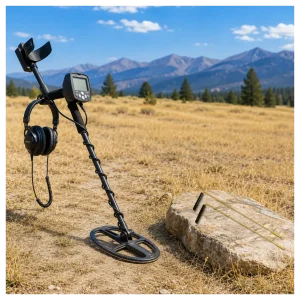
A metal detector is an electronic measuring instrument. It generates an electromagnetic field and detects changes associated with electrically conductive or metallic objects within its effective range. Its response can be tested and measured, although factors such as the type and size of the target, its orientation and depth, soil conditions, operating frequency, and detector settings can all affect what it can detect. Depending on the equipment, discrimination and other settings may also be used to emphasize or reject particular types of targets.
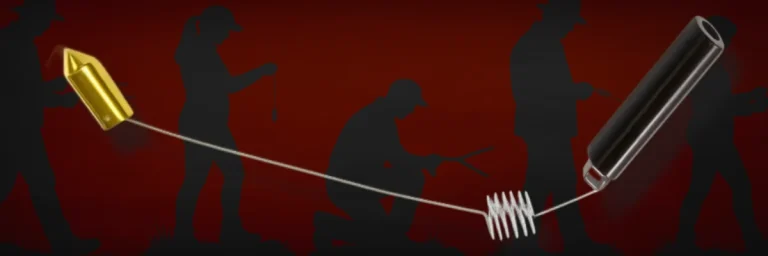
A dowsing rod contains no comparable electronic detection system. It requires no battery or generated electromagnetic field, and the visible movement of the rod occurs through its interaction with the person holding it. The dowser may establish the object of the search through mental focus, a specific question or intention, while some dowsing instruments can incorporate a witness chamber containing a sample or representation associated with the target.
This means the two tools shouldn’t necessarily be treated as interchangeable. A metal detector is specifically designed to detect metallic targets within the capabilities of the instrument. Dowsing is not limited to metal and has traditionally been used to search for water, underground pipes, minerals, buried objects and other targets or environmental influences.
Can Dowsing Go Beyond the Range of an Electronic Detector?
Experienced dowsers sometimes report obtaining responses to targets beyond the practical detection range of conventional instruments. For example, a dowser searching for a buried metal object may report a response at a greater depth than a particular metal detector can reach. Rather than adjusting an electronic instrument for conductivity, frequency, or target discrimination, the dowser may concentrate mentally on the particular substance or object being sought or use a witness to help establish the focus of the search.
A similar situation can arise when dowsing for environmental influences. Electronic instruments measure particular physical quantities within defined frequency ranges, sensitivities, and other technical limitations. A dowser may sometimes obtain a response beyond what a particular instrument registers. This does not necessarily mean that the dowser and the electronic instrument are detecting the same physical phenomenon, nor does the absence of an instrument reading establish what produced the dowsing response.
These reported differences are one reason some experienced dowsers regard dowsing and electronic detection as complementary rather than interchangeable methods. Electronic instruments have the considerable advantage of providing repeatable responses based on defined physical operating principles and measurable parameters. Dowsing, on the other hand, may apply to a much wider range of questions and targets without requiring different electronic sensors or settings.
Dowsing rods also have practical advantages in their simplicity. They are lightweight, inexpensive, require no power, and can be carried almost anywhere. Claims that they can locate targets beyond the capabilities of conventional instruments have not been established to the same scientific standards used to characterize electronic measuring equipment. Nevertheless, such experiences are frequently reported by dowsers and remain a part of the continuing discussion about what information a dowsing response may represent.
What Can Dowsing Rods Be Used to Find?
Dowsing has traditionally been used to search for underground water, minerals, buried pipes and cables, lost objects, and other hidden targets. Its history also includes more unusual applications. There are accounts of military personnel being taught or experimenting with dowsing for purposes such as locating water, tunnels, unexploded ordnance, and landmines.
The range of claimed applications extends beyond locating physical objects. Some dowsers use rods to investigate environmental influences, energetic boundaries, or other conditions for which conventional searching equipment may not provide an equivalent means of detection. The dowser may focus on a specific target or question, while some rods incorporate a witness chamber containing a sample or representation of what is being sought.
These historical and practical uses should not be confused with scientific validation. Controlled studies have not established dowsing as a consistently reliable detection method, while experienced dowsers continue to report successful results in real-world situations. This difference between experimental findings and reported field experience remains part of the continuing debate surrounding dowsing.
Final Thoughts: Magnetism Isn't the Whole Question
So, are dowsing rods magnetic? In most cases, no. Common dowsing rods made from brass, copper, wood, plastic, or suitable stainless steel do not need to be magnetic to be used for dowsing. Nor is magnetic attraction necessary to explain why an L-rod turns or crosses in the hands.
The ideomotor response provides a well-recognized explanation for how small, unconscious muscular movements can produce much larger and more noticeable movements of a dowsing rod. What it does not necessarily establish is what prompted that unconscious response at a particular moment or location. This distinction is important when considering the experiences reported by dowsers.
Over centuries of use, dowsing has been applied to searches for water, minerals, buried objects, and many other targets. While controlled scientific testing has not established a single mechanism that explains successful dowsing, its continued practical use and the experiences of skilled practitioners have kept the subject open to investigation and debate.
Perhaps, then, magnetism is only a small part of a much larger question. The rod itself is a remarkably simple instrument. The greater mystery lies in the relationship between the rod, the dowser, and whatever information may be producing the response.
Looking for a Dowsing Rod?
Looking for a supplier of dowsing rods, pendulums, and other items? Then head over to PendulumsPlus.


One Response
I just like the helpful information you provide in your articles